
Local Ranchers See Price Strength from Unlikely Source
Steve Hallstrom
Special to The Farmer
As McKenzie County cattle producers prepare for the upcoming calving season, they are getting an unexpected boost to demand - the growth in weight loss drugs.
Retail beef prices in North Dakota have hit historic peaks, with ground beef averaging $6.63 per pound. This represents a sturdy 36 percent increase from the $4.88 average recorded just five years ago in 2021. Agricultural experts point to a mix of factors driving this “meat-market” inflation. While global supply chain shifts and a decade of erratic weather have tightened the market, a modern medical trend is now adding fresh pressure to demand. During a recent interview on AM 1090 The Flag, Ag Director Bridgette Readel explained how GLP-1 weight-loss medications, such as Ozempic, are reshaping the industry.
The December Consumer Price Index (CPI) reported that year-over-year beef price inflation was significantly high in late 2025, with the overall beef and veal category seeing around a 16.4 percent annual price increase in December 2025, driven by record-high prices for steaks (up 17.8 percent) and roasts (up 17.5 percent), and ground beef (up 15.5 percent) compared to December 2024.
“So the hope is that as we get through 2027, we can start to see an increase in herd numbers,” said Readel. “There’s a lot of discussion as to how that’s going to happen. Are we on track for it to happen as of yet? But we’re going to watch and see how it goes. Yeah. And while demand will still be strong. People like lean beef. So that’s a big deal. And ozempic and other GLP drugs are pushing us to more proteins.”
GLP-1 users have turned to beef and other lean meats to get tangible protein for preserving muscle mass during weight loss, while staying full for longer periods of time. But they must choose lean cuts to avoid aggravating these drugs’ common nausea/vomiting side effects from fatty foods. These drugs slow stomach emptying, making high-fat, greasy foods difficult to digest and causing significant nausea, bloating, and vomiting.
“So, when it comes to beef, demand was strong already and we just don’t have the supply. Realistically, what has happened over the last five years with drought conditions and so forth led to a lot of herd liquidation across the U.S. And because this is not a factory produced product, we can’t turn on a spigot and pop out more calves. It takes time to build those herds. And when you have these high numbers, you have folks that have been in production for a long time who say, wow, I could go out on a high note and sell off their stock. But then you have younger producers who say, I can’t afford to buy what that older producer wants to sell at that level. And so those cattle are going to slaughter versus back into the pastures for further production.”
The local impact in Watford City is a double-edged sword. While ranchers are seeing record-high prices for their calves and steers, the cost of staying operational is mounting. National cattle inventories have plummeted to their lowest levels in over 70 years, according to USDA data. For 2026, production expenses remain a significant hurdle; nitrogen fertilizer is projected to average $760 per ton, while new import tariffs have triggered a 16 percent price hike for certain critical repair parts.
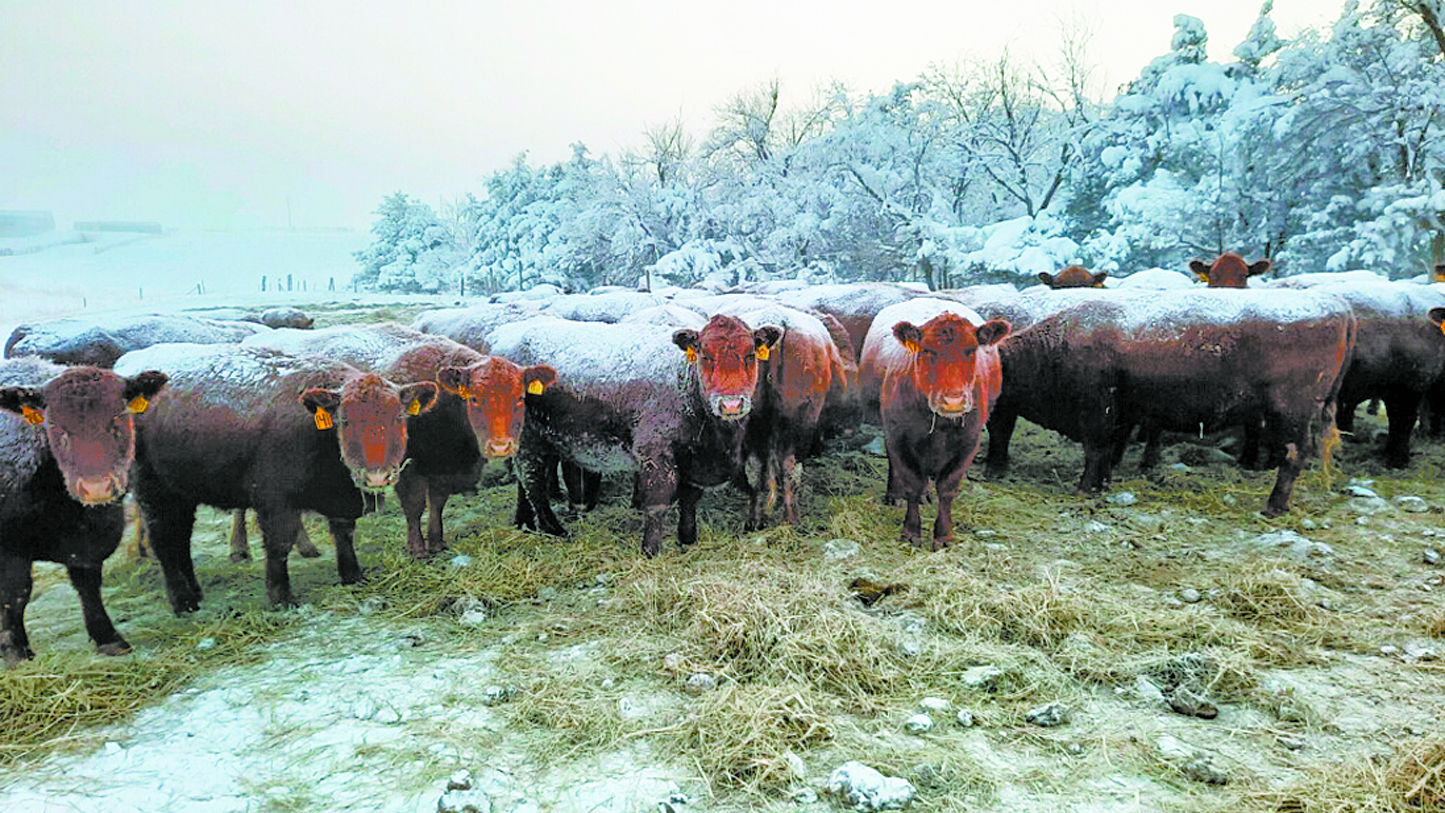
Weather remains the ultimate wildcard for McKenzie County. Forecasters indicate that La Niña conditions will persist through the first half of 2026, likely bringing more moisture than the 2025 season. However, this moisture comes with a “cold caveat,” as temperatures are expected to be significantly lower than normal. While the snow is critical for replenishing dry pastures, the frigid conditions will present immediate challenges for ranchers entering the upcoming calving window.
The broader agricultural landscape is currently reeling from the latest World Agricultural Supply and Demand Estimates (WASDE) report. Readel noted that a surprise increase in the 2025 corn harvest has created a “ripple effect” across the economy, complicating the financial outlook for the coming year.
“You know, there have been a lot of big discussions since Monday’s WASDE report came out. WASDE is the U.S. Department of Ag report on world supply and demand. And surprisingly enough, they really increased the amount of bushels of corn harvested in 2025, much to the shock of many. And those bushels drove down the market for a while. So now it’s like that ripple effect. We’re going to have a splash. It’s going to smooth out. But it’s interesting to note that the Trump administration had announced that there would be farmer bridge payments that would be paid at the end of February. And now with these extra bushels coming into the marketplace, bringing down our overall pricing, it’s sort of a wash. We see that there’s going to be a number of farmers having very, very close conversations with their bankers and lenders going into the new year.”
Lenders across the region report a sharp uptick in mediation and transition planning. According to Readel, only about 52 percent of farms are projected to show a profit on paper for the 2025 fiscal year.
“If you talk to ag lenders in the region, and thankfully many of them are willing to give some insight, they’re saying, we have more people looking towards mediation in the state of Minnesota than we have in a combination of the last three years,” she stated. “We see more folks that are really looking at transition planning. How do I get out? Because I don’t want to lose all of my equity. Should I be renting out more land this year? What changes should I be making? Should I sell some land or give up some rented ground in order to lower some of my exposure and make things more manageable for me? Now, this is not telling you that every farm is broke. There are certainly those that are still doing well, but they may see a decrease in some of their assets, because they are having to rely on those or mortgage those more heavily than what they have in the past.”
One area of note is machinery. Since 2020, new and used farm equipment inflation has been substantial, and between 2020 and 2023 alone, prices jumped approximately 20 percent. Although the rapid increase has slowed, and used equipment values are stabilizing or slightly declining from their peaks, the “new normal” is a a new, higher cost baseline than pre-pandemic levels.
“Even the operators who are good at what they do, have historically run profitable operations say it’s tough right now,” said Readel. “And I think that’s really the key. We know that young farmers, we know that if you’re highly leveraged, it’s tough right now because your loan payments are probably going up. Your inputs are probably going up and your commodity price, the money you’re getting, is not keeping up with that. But even the guys that own all their stuff, that don’t have a lot of loans out there, that know what they’re doing and have good cropland and are growing, it’s tough for everybody right now in some way.”
In response to these tightening margins, North Dakota producers are diversifying. Some are investing in drone-based spraying technology, while others are exploring “vertical real estate” through cell tower lease renewals. However, Readel warned that this desperation for supplementary income has also made landowners - specifically aging widows - targets for fraud.
“Do you know who is the largest landowner group in the state of Iowa? Women over 80, who are Widows in many cases. The land was passed on. They’re still alive. The sons are managing, the daughters are managing, but mom still owns it. And they’re also a critical spot where we’re concerned about fraud because somebody calls up mom or stops by the nursing home and says, how about you lease me some land and then find out it’s not a real deal. Now, that’s tough. And it’s happening all too often.”
Subscribe Today For Less Than $1/Week at www.watfordcitynd.com